

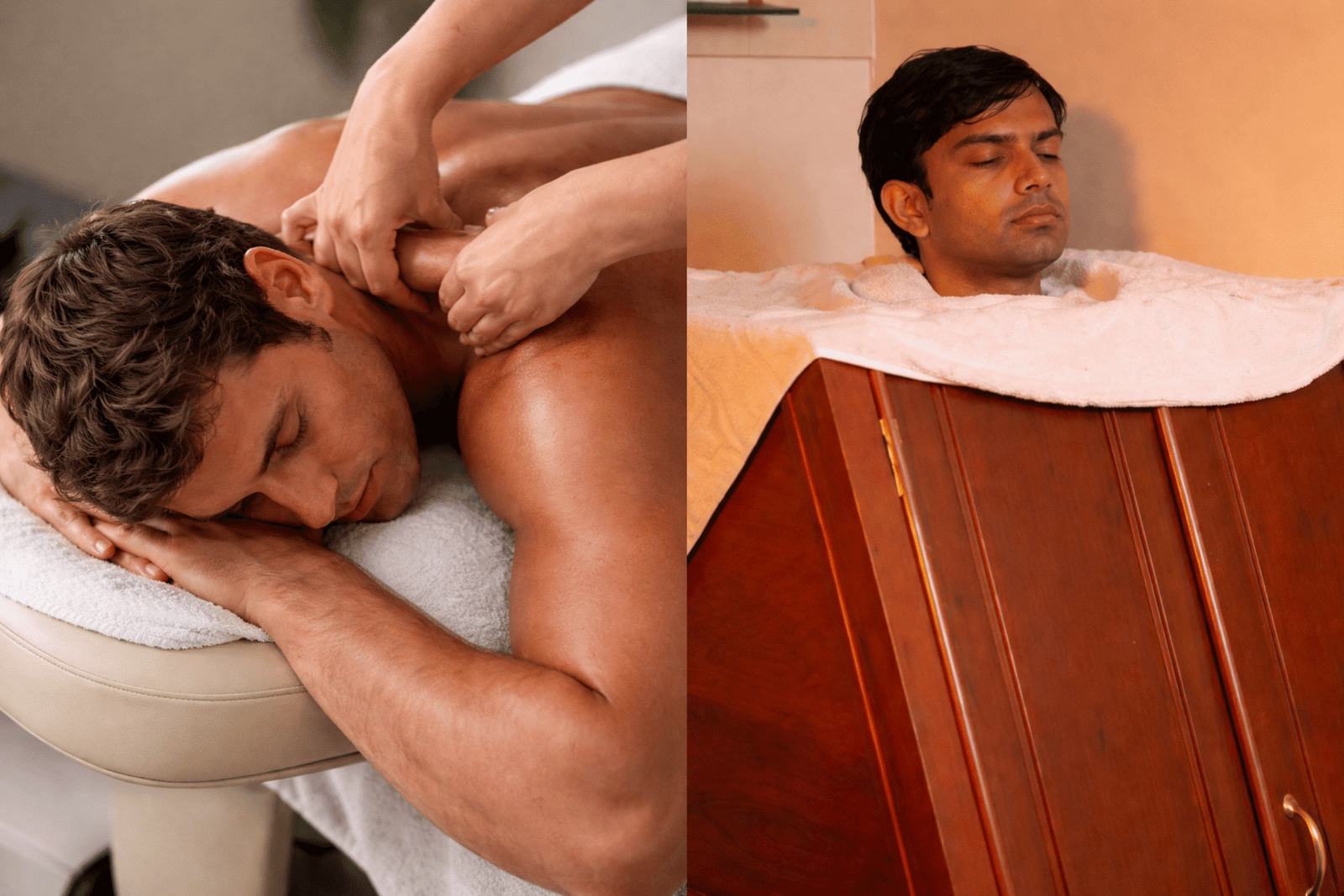
Abhyanga with steam modern lifestyles are fast and demanding. Stress, fatigue, and poor sleep have become common. Many people turn to quick fixes. However, these solutions often fail to address the root cause.
This is where abhyanga with steam stands out. It offers a natural and effective way to restore balance. By combining oil massage with steam therapy, it supports deep relaxation and detoxification.
Today, holistic healing is gaining momentum. Systems like Ayurveda, Siddha, and naturopathy are widely accepted. They focus on prevention and long-term wellness.
Among these, abhyanga therapy with steam is becoming popular. It blends traditional wisdom with modern wellness needs. With growing awareness, sugamgunam brings this therapy to the forefront of holistic healthcare.
Understanding Abhyanga with Steam in Holistic Medicine
Abhyanga with steam is a combination therapy in Ayurveda. It includes a full-body oil massage followed by steam therapy.
The massage uses warm herbal oils. These oils nourish the skin and tissues. They also improve blood circulation.
After the massage, steam therapy is applied. This opens the pores and helps remove toxins. As a result, the body feels lighter and more relaxed.
This therapy aligns with holistic principles. Ayurveda focuses on dosha balance. Siddha emphasizes elemental harmony. Naturopathy promotes natural detox.
Therefore, abhyanga treatment with steam works as a complete healing process. It supports both physical and mental well-being.
Types of Natural Healing Systems
Naturopathy
Naturopathy focuses on natural healing. It uses diet, lifestyle changes, and detox methods.
Patients follow simple routines. These include healthy eating and stress management. Over time, these habits improve overall wellness.
Ayurveda
Ayurveda is a traditional Indian system. It balances Vata, Pitta, and Kapha doshas.
Therapies like abhyanga therapy play a key role. Herbal oils and personalized care help restore balance.
Siddha Medicine
Siddha medicine is rooted in Tamil traditions. It uses herbs and minerals for treatment.
It is a key part of traditional Tamil medicine. It is effective for chronic conditions and metabolic disorders.
Modern siddha medicine manufacturers are improving quality and safety. This supports wider adoption.
Acupuncture
Acupuncture focuses on energy flow. It uses fine needles to stimulate specific points.
This improves circulation and reduces stress. It also supports pain relief and recovery.
Applications Across Industries
Abhyanga with steam is widely used across industries. Its applications go beyond wellness centers.
In healthcare, it supports recovery from chronic conditions. It improves circulation and reduces inflammation.
In wellness and lifestyle sectors, it helps manage stress. Many professionals prefer natural herbal treatment for relaxation.
In research and development, this therapy is gaining validation. Studies show its impact on detoxification and stress reduction.
Organizations like Isha Foundation and AyurVAID Hospitals promote integrative healing. Similarly, holistic centers are adopting this therapy.
This growing adoption highlights its relevance in modern healthcare.
Benefits and Limitations
Abhyanga with steam offers several benefits. First, it improves blood circulation. This supports tissue nourishment.
Second, it helps detoxify the body. Steam opens pores and removes impurities.
Another benefit is stress relief. The therapy calms the nervous system. It also improves sleep quality.
Additionally, it enhances skin health. Herbal oils nourish and hydrate the skin.
However, there are limitations. Results require consistency. One session may not be enough.
Also, professional guidance is essential. Incorrect techniques may reduce effectiveness.
Despite this, the therapy is gaining popularity. It is a key part of holistic herbal pharmacy approaches.
Real-World Case Studies
A wellness study showed strong results. Patients undergoing abhyanga treatment with steam reported a 42% reduction in stress levels. This improved overall well-being.
Another study focused on detoxification. Patients experienced a 37% improvement in metabolic function after regular sessions.
Institutions like Siddhalaya and Ethnic Health Care highlight these benefits.
Hospitals such as Shree Hospital Group and MI Ayurveda integrate these therapies into treatment plans.
These measurable outcomes confirm the effectiveness of natural therapies.
Comparison of Healing Systems
| Feature | Ayurveda | Siddha | Naturopathy | Acupuncture |
|---|---|---|---|---|
| Origin | India | Tamil Nadu | Global | China |
| Approach | Herbal + lifestyle | Mineral + herbal | Natural healing | Energy points |
| Use Case | Chronic diseases | Skin & liver issues | Preventive care | Pain management |
Each system has unique strengths. However, abhyanga with steam stands out for detox and relaxation. It offers both therapeutic and preventive benefits.
How to Get Started with Abhyanga with Steam
Starting abhyanga with steam therapy is simple. However, a structured approach is important.
First, identify your health goals. This helps in selecting the right treatment.
Next, consult certified practitioners. Professional guidance ensures safety and effectiveness.
Then, combine therapy with lifestyle changes. This improves long-term results.
To begin:
- Define your health concerns
- Choose suitable therapy
- Consult experts
- Track progress
Consistency is key. Results improve over time.
Conclusion
Abhyanga with steam is a powerful Ayurvedic therapy. It combines massage and detox for deep healing.
As people move away from quick fixes, holistic treatments are gaining importance. This therapy offers long-term wellness benefits.
When integrated with Ayurveda and Siddha, it creates a complete healing system. Together, they support physical and mental health.
The future of healthcare is holistic. It blends tradition with modern science.
Citations
- World Health Organization – Traditional Medicine Strategy Report
- Ayurveda Research Journals on Panchakarma Therapies
- Journal of Alternative and Complementary Medicine
- Siddha Medicine Publications, Government of India
- Global Wellness Institute Reports on Integrative Medicine